
CE Certification 120 Volt LED Neon Rope Light Safety and Compliance Guide
Mar . 17, 2026 01:55 Back to list
CE Certification 120 Volt LED Neon Rope Light Safety and Compliance Guide
CE Certification 120 Volt LED Neon Rope Light: A Comprehensive Guide
When illuminating spaces, especially for commercial or decorative purposes, safety and quality are paramount. 120 volt LED neon rope lights offer a vibrant and energy-efficient lighting solution. However, ensuring these lights meet international safety standards, like CE certification, is crucial. This article provides an in-depth look at CE certification for 120V LED neon rope lights, exploring its importance, the testing process, and how to choose certified products. Understanding these factors guarantees a safe and reliable lighting experience.
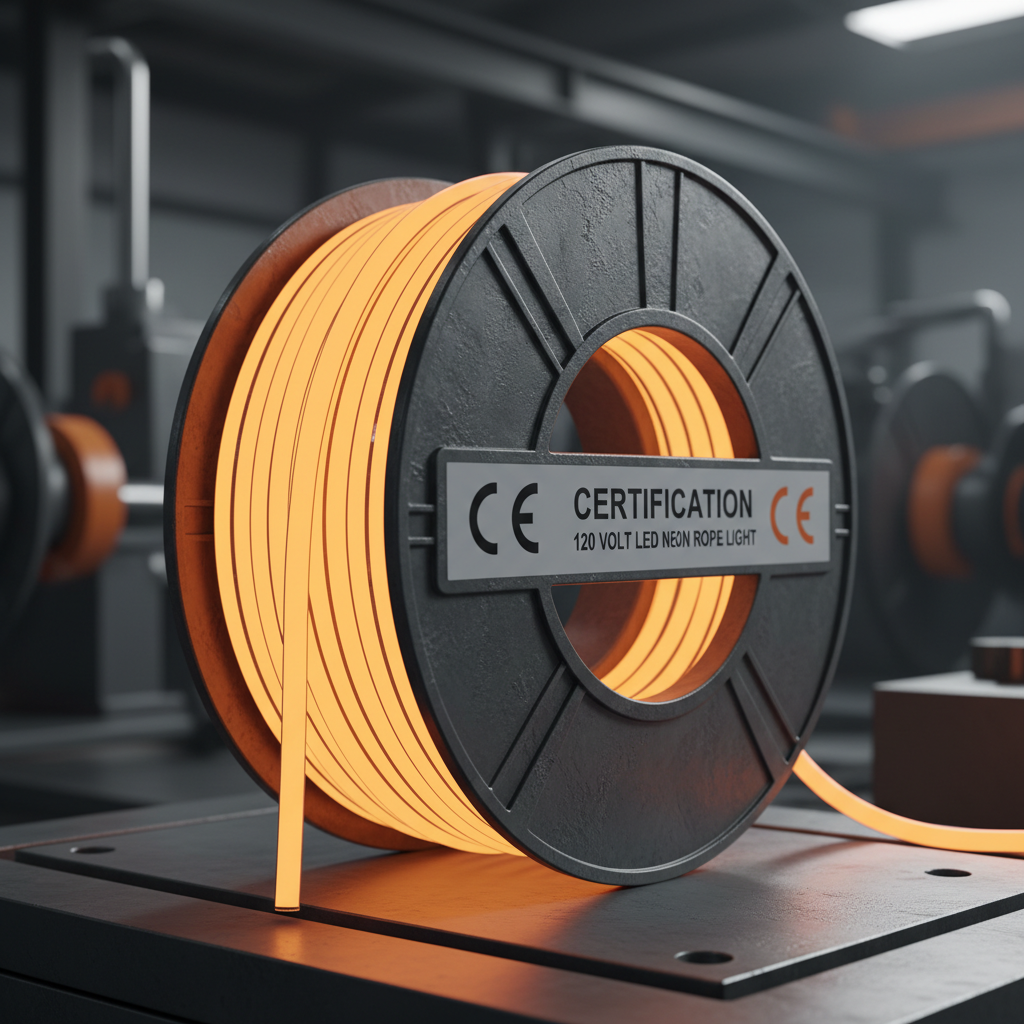
What is CE Certification and Why Does it Matter?
CE marking (Conformité Européenne) is a mandatory conformity marking for products sold within the European Economic Area (EEA). It's not a stamp of approval per se, but rather a declaration by the manufacturer that the product meets all applicable European safety, health, and environmental protection requirements. For 120 volt LED neon rope lights, this includes ensuring electrical safety, electromagnetic compatibility (EMC), and compliance with RoHS directives (Restriction of Hazardous Substances). Without CE certification, products cannot legally be sold in the EEA, and importing them could lead to penalties and product recalls. It signals to consumers and regulators that the product has been tested and meets essential safety standards.
Key Takeaway: CE certification demonstrates a manufacturer's commitment to product safety and compliance with European regulations, ensuring a safe product for consumers.
The CE Certification Process for LED Neon Rope Lights
Obtaining CE certification for 120 volt LED neon rope lights involves several stages. First, the manufacturer must identify all relevant EU directives and harmonized standards applicable to their product. This typically includes the Low Voltage Directive (LVD) and the EMC Directive. Next, they must conduct thorough testing, either in-house or by a Notified Body (an independent testing organization accredited by an EU member state). Testing assesses electrical safety (insulation, grounding, etc.), EMC (interference levels), and RoHS compliance (absence of restricted substances). If the product passes testing, the manufacturer creates a Technical File documenting the design, manufacturing process, and test results. Finally, they affix the CE marking to the product and create a Declaration of Conformity.
Testing Parameters:
• Electrical Safety: Insulation resistance, leakage current, grounding continuity.
• EMC: Radiated emissions, conducted emissions, immunity to interference.
• RoHS: Testing for restricted substances like lead, mercury, cadmium, and hexavalent chromium.
Key Tests Performed for CE Certification of 120V LED Neon Rope Lights
Several specific tests are crucial for verifying the safety and compliance of 120 volt LED neon rope lights. These tests are designed to simulate real-world conditions and identify potential hazards. Common tests include dielectric strength testing (to assess insulation integrity), continuity testing (to verify proper grounding), and EMC testing (to ensure minimal interference). RoHS compliance is verified through chemical analysis of the materials used in the light's construction. Manufacturers must maintain detailed records of all testing procedures and results.
Choosing Certified LED Neon Rope Lights: What to Look For
When purchasing 120 volt LED neon rope lights, always look for the CE marking clearly displayed on the product and packaging. Verify that the manufacturer provides a Declaration of Conformity if requested. Reputable suppliers, like Pulongte, prioritize safety and compliance and will readily provide certification documentation. Avoid purchasing products from unknown sources with no visible CE marking, as these may not meet safety standards and could pose a fire or electrical hazard. Don’t hesitate to ask the supplier for proof of testing and certification.
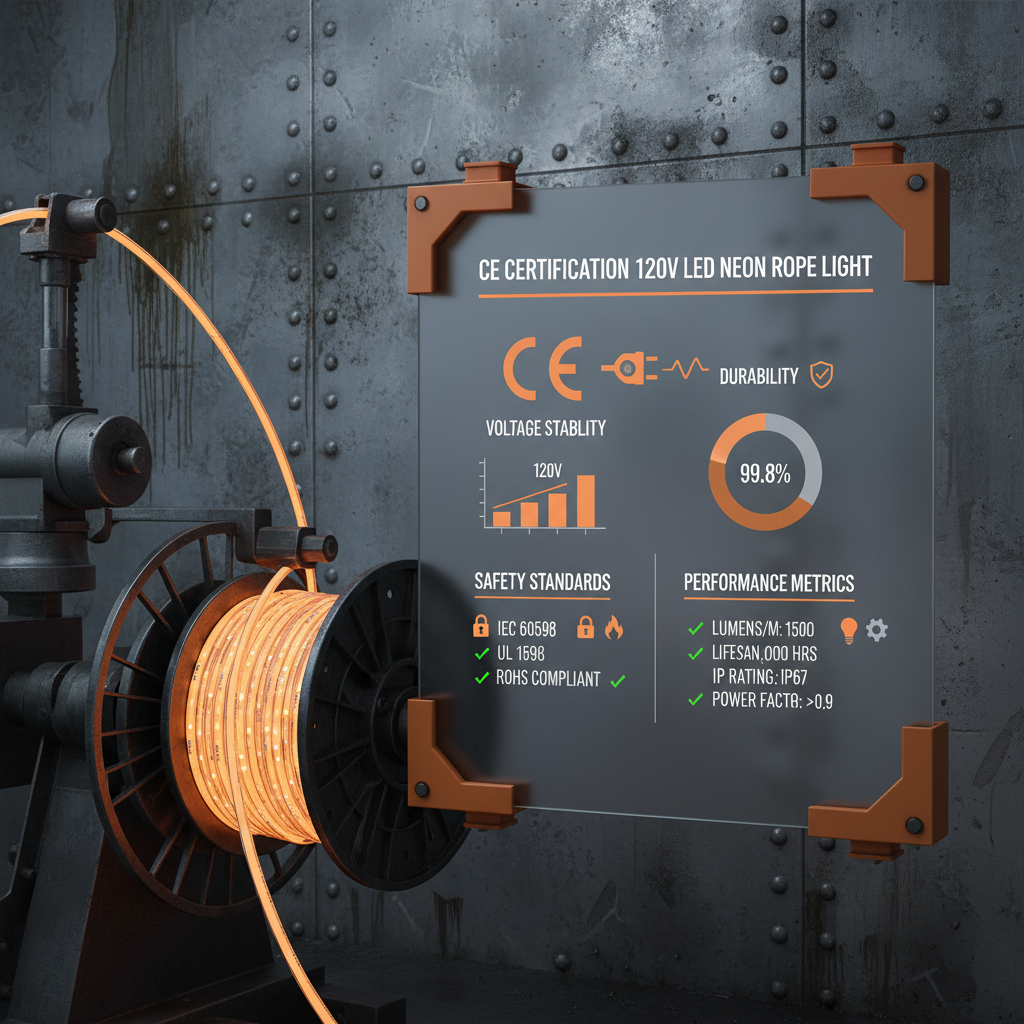
The Benefits of Choosing CE Certified Lights
Investing in CE-certified 120 volt LED neon rope lights offers several advantages. You can be confident that the product is safe to use and won't pose a risk of electrical shock or fire. Compliance with RoHS directives ensures the lights are environmentally friendly. Certified products are also more likely to be durable and reliable, offering a longer lifespan and reducing the need for frequent replacements. Choosing certified lights demonstrates a commitment to safety and quality, protecting both your customers and your business.
Conclusion: Prioritizing Safety with CE Certified LED Neon Rope Lights
Selecting CE-certified 120 volt LED neon rope lights is a smart investment in safety, quality, and peace of mind. By choosing products that meet rigorous European standards, you ensure a reliable and hazard-free lighting solution. Don't compromise on safety – choose certified products from a trusted supplier like Pulongte.
Frequently Asked Questions (FAQs)
What does RoHS compliance mean for LED rope lights?
RoHS (Restriction of Hazardous Substances) compliance means the LED rope lights do not contain certain dangerous substances like lead, mercury, cadmium, hexavalent chromium, PBBs, and PBDEs. These substances are harmful to both the environment and human health. RoHS compliance ensures that the lights are more environmentally friendly and pose a lower risk to users during manufacturing, use, and disposal.
Can I use non-CE certified 120V LED rope lights?
While it might be tempting to opt for cheaper, non-CE certified options, it’s strongly discouraged. These lights haven't undergone the necessary safety testing and may pose significant risks, including electrical shock, fire hazards, and exposure to harmful substances. Using non-certified products could also invalidate your insurance and potentially lead to legal liabilities.
Where can I find the CE marking on LED rope lights?
The CE marking should be clearly visible on the product itself, its packaging, or both. It's typically a logo consisting of the letters "CE" inside a circle. If you can't find the marking, it's a red flag, and you should avoid purchasing the product. A legitimate manufacturer will proudly display the CE mark to demonstrate their commitment to safety and compliance.
What is the role of a Notified Body in CE certification?
A Notified Body is an independent organization designated by an EU member state to assess the conformity of certain products to relevant directives. For complex products like LED rope lights, manufacturers often choose to have their products tested by a Notified Body to ensure an unbiased and credible assessment. This adds an extra layer of assurance to the certification process.
-
Premium ce certification aluminumplastic edge strip for Safety
NewsApr.16,2026
-
Benefits of CE Certification Garage Door Weather Seal Strip for Home
NewsApr.09,2026
-
CE Certification Bath Seal Strip Screwfix A Comprehensive Guide
NewsApr.07,2026
-
CE Certification Elan 2S Chrome Rocker Trim Strip A Comprehensive Guide
NewsApr.04,2026
-
CE Certification LED Signs and Trim Cap Solutions for Enhanced Safety
NewsMar.31,2026
-
CE Certification D Shaped Rubber Seal Strip for Industrial Applications
NewsMar.28,2026