The aesthetic appeal and functional benefits of flat chrome trim strip are increasingly recognized across diverse industries. From automotive detailing to architectural accents and appliance design, these strips offer a sleek, modern finish that enhances product value and consumer satisfaction. Understanding the manufacturing processes, material properties, and application techniques associated with flat chrome trim strip is crucial for professionals seeking to optimize design, durability, and cost-effectiveness in their projects.
Globally, the demand for aesthetically pleasing and durable trim solutions is consistently growing, fueled by evolving consumer preferences and technological advancements in material science. The rise of minimalist design trends has further propelled the popularity of flat chrome trim strip, as it provides a subtle yet impactful visual element. Industries are actively seeking innovative materials that offer both aesthetic enhancement and practical advantages, positioning flat chrome trim strip as a valuable asset in a competitive market.
The strategic incorporation of flat chrome trim strip presents opportunities for manufacturers and designers to elevate their offerings. By leveraging the unique qualities of this material, businesses can cater to the growing demand for high-quality, visually appealing products, ultimately contributing to enhanced brand reputation and increased market share.
The Core Characteristics of flat chrome trim strip
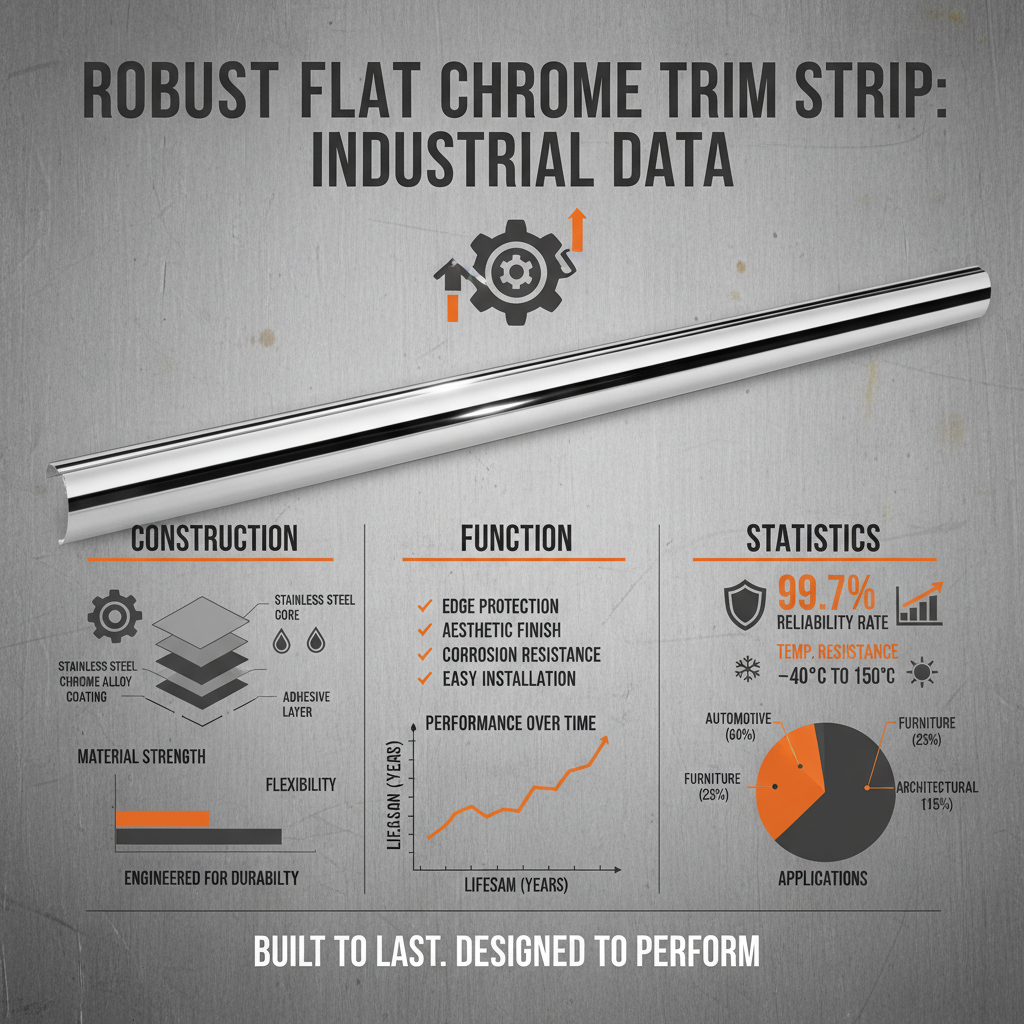
Flat chrome trim strip is characterized by its sleek, low-profile design and reflective surface, offering a modern aesthetic to a wide range of products. It typically comprises a base metal, often steel or aluminum, coated with layers of copper, nickel, and finally, chromium. This multi-layer plating process provides exceptional corrosion resistance and a brilliant, long-lasting shine.
The key benefit lies in its versatility and durability. Unlike bulky chrome accents, flat trim seamlessly integrates into product designs, adding a touch of sophistication without compromising functionality. Its resistance to scratches, oxidation, and environmental factors ensures a prolonged lifespan, making it a cost-effective solution for manufacturers across various industries.
The Global Production and Supply Chain of flat chrome trim strip
The production of flat chrome trim strip is concentrated in several key regions, primarily in Asia, including China, Taiwan, and Japan. These countries possess established electroplating infrastructure, skilled labor forces, and access to the raw materials necessary for chrome plating. A complex global supply chain connects these manufacturing hubs with downstream industries worldwide.
Raw materials, such as steel or aluminum, are sourced internationally and transported to plating facilities. The finished trim is then distributed to automotive manufacturers, appliance companies, architectural firms, and other end-users. Geopolitical factors, raw material price fluctuations, and logistical challenges can impact the stability of this supply chain.
Increasingly, companies are seeking to diversify their supply chains and implement sustainable sourcing practices to mitigate risks and ensure ethical production standards within the flat chrome trim strip industry. This includes investing in technologies that reduce waste, minimize environmental impact, and promote responsible material handling.
Material Composition and Manufacturing Processes of flat chrome trim strip
Flat chrome trim strip fundamentally relies on a multi-stage electroplating process. The initial substrate typically consists of a metal like steel, stainless steel, or aluminum, selected for its formability and structural integrity. The surface is meticulously prepared through cleaning, degreasing, and etching to ensure optimal adhesion for subsequent layers.
Following preparation, a layer of copper is applied via electrodeposition, providing a conductive base for further plating. Next, a nickel layer is deposited, contributing to corrosion resistance and leveling the surface. Finally, chromium is electroplated onto the nickel layer, creating the bright, durable, and corrosion-resistant finish characteristic of flat chrome trim. The thickness of each layer is carefully controlled to achieve desired performance characteristics.
Emerging technologies are exploring alternative plating methods, such as physical vapor deposition (PVD) and chemical vapor deposition (CVD), which offer enhanced control over coating thickness and composition, potentially leading to more sustainable and efficient manufacturing processes for flat chrome trim strip.
Performance Metrics and Quality Control for flat chrome trim strip
Evaluating the quality of flat chrome trim strip relies on a range of performance metrics, including corrosion resistance, adhesion strength, surface finish, and hardness. Standardized testing methods, such as salt spray testing, adhesion tests, and microhardness measurements, are employed to ensure compliance with industry standards and customer specifications.
Quality control procedures encompass every stage of the manufacturing process, from raw material inspection to final product assessment. Visual inspection for defects like pitting, blistering, or discoloration is crucial, along with dimensional checks to verify accurate sizing and shape. Statistical process control (SPC) techniques are often utilized to monitor process variations and maintain consistent product quality.
Comparative Performance of flat chrome trim strip Plating Methods
Diverse Industrial Applications of flat chrome trim strip
The applications of flat chrome trim strip are widespread across numerous industries. In the automotive sector, it’s used for decorative accents on interiors and exteriors, enhancing vehicle aesthetics and perceived value. The appliance industry utilizes it for trim on refrigerators, dishwashers, and other household products.
Architectural applications include accentuating building facades, window frames, and interior design elements. Additionally, it finds use in furniture manufacturing, point-of-sale displays, and various consumer goods. The material's durability and aesthetic appeal make it suitable for both functional and decorative purposes across diverse product categories.
The Economic and Environmental Impact of flat chrome trim strip
The economic impact of flat chrome trim strip extends throughout the supply chain, supporting manufacturing jobs, material suppliers, and logistics providers. The demand for aesthetically pleasing and durable products drives continuous innovation and investment in advanced plating technologies.
However, traditional chrome plating processes can have significant environmental impacts due to the use of hazardous chemicals, such as hexavalent chromium. Concerns about environmental regulations and worker safety are prompting the development of alternative plating methods, such as trivalent chromium plating, which are more environmentally friendly.
Sustainable sourcing of raw materials, waste reduction strategies, and responsible disposal practices are becoming increasingly important to minimize the environmental footprint of the flat chrome trim strip industry.
Future Trends and Innovations in flat chrome trim strip Technology
Future trends in flat chrome trim strip technology are focused on sustainability, enhanced performance, and cost reduction. Research and development efforts are concentrated on alternative plating materials and processes that minimize environmental impact.
Nanotechnology is being explored to create coatings with improved corrosion resistance, scratch resistance, and self-healing properties. Digitalization and automation are also playing a role, enabling precise control over plating parameters and reducing process variability.
The integration of smart sensors and data analytics can optimize plating processes, improve quality control, and enable predictive maintenance, ultimately contributing to increased efficiency and reduced costs in the flat chrome trim strip industry.
Key Trends in flat chrome trim strip Future Development
| Technology Area |
Innovation Focus |
Potential Impact |
Implementation Timeline |
| Alternative Plating Materials |
Trivalent Chromium, Nickel-Free Coatings |
Reduced Environmental Impact, Improved Worker Safety |
Short-Term (1-3 years) |
| Nanotechnology |
Self-Healing Coatings, Enhanced Corrosion Resistance |
Extended Product Lifespan, Reduced Maintenance |
Mid-Term (3-5 years) |
| Digitalization & Automation |
Automated Plating Lines, Real-Time Process Monitoring |
Increased Efficiency, Improved Quality Control |
Short-Term (1-3 years) |
| Surface Pre-treatment |
Laser Cleaning, Plasma Treatment |
Improved Adhesion, Reduced Chemical Usage |
Mid-Term (3-5 years) |
| Process Optimization |
AI-Powered Parameter Control |
Reduced Waste, Optimized Coating Thickness |
Long-Term (5+ years) |
| Circular Economy Initiatives |
Chrome Recovery & Recycling |
Reduced Resource Depletion, Closed-Loop System |
Mid-Term (3-5 years) |
FAQS
Flat chrome trim strip offers a unique combination of aesthetic appeal, durability, and corrosion resistance, making it superior to many alternative finishing options. Its sleek, low-profile design seamlessly integrates into product designs, enhancing their visual appeal. Furthermore, the multi-layer plating process provides exceptional protection against environmental factors, ensuring a long lifespan and reducing maintenance costs. Compared to paints or other coatings, chrome offers a harder, more scratch-resistant surface.
Ensuring quality begins with sourcing from reputable suppliers who adhere to strict quality control standards. Proper surface preparation of the substrate is crucial for optimal adhesion. During installation, avoid abrasive cleaners or harsh chemicals that could damage the chrome finish. Regular cleaning with mild soap and water will help maintain its luster. For outdoor applications, consider a clear coat for added UV protection, extending the lifespan of the trim.
Traditional chrome plating processes can utilize hexavalent chromium, a hazardous substance. However, advancements in technology have led to the development of trivalent chromium plating, a more environmentally friendly alternative. It's important to work with plating facilities that prioritize responsible waste management and adhere to environmental regulations. Exploring alternative plating materials and finishes can further reduce the environmental impact of your products.
Lead times for custom flat chrome trim strip orders vary depending on the complexity of the design, the volume of the order, and the plating facility's current workload. Generally, smaller orders with standard designs may take 2-4 weeks, while larger or more complex orders can require 6-8 weeks or longer. It's essential to discuss your specific requirements with the supplier to obtain an accurate lead time estimate.
The cost of flat chrome trim strip can be higher than some other metal finishing options, such as painting or powder coating, due to the complexity of the plating process and the materials involved. However, its durability and long lifespan often make it a cost-effective choice in the long run, reducing the need for frequent replacements or repairs. The cost also depends on factors like the size of the order, the complexity of the design, and the chosen plating method.
Yes, flat chrome trim strip can be applied to a variety of base materials, including steel, stainless steel, aluminum, and certain plastics. However, proper surface preparation is essential for ensuring optimal adhesion and longevity. The choice of base material will influence the plating process and the final cost. It’s crucial to consult with a plating expert to determine the best material and process for your specific application.
Conclusion
In conclusion, flat chrome trim strip represents a compelling solution for enhancing both the aesthetic appeal and functional durability of products across a wide range of industries. From its robust manufacturing processes to its versatile applications, this material offers a unique combination of benefits. The ongoing drive for sustainability and innovation is shaping the future of flat chrome trim strip, with emerging technologies promising even more environmentally friendly and high-performance solutions.
Looking ahead, embracing these advancements and prioritizing responsible manufacturing practices will be key to unlocking the full potential of flat chrome trim strip. By investing in research and development, and fostering collaboration throughout the supply chain, we can ensure that this valuable material continues to meet the evolving needs of a dynamic global market. Visit our website at www.pulongte.com to learn more about our flat chrome trim strip solutions.