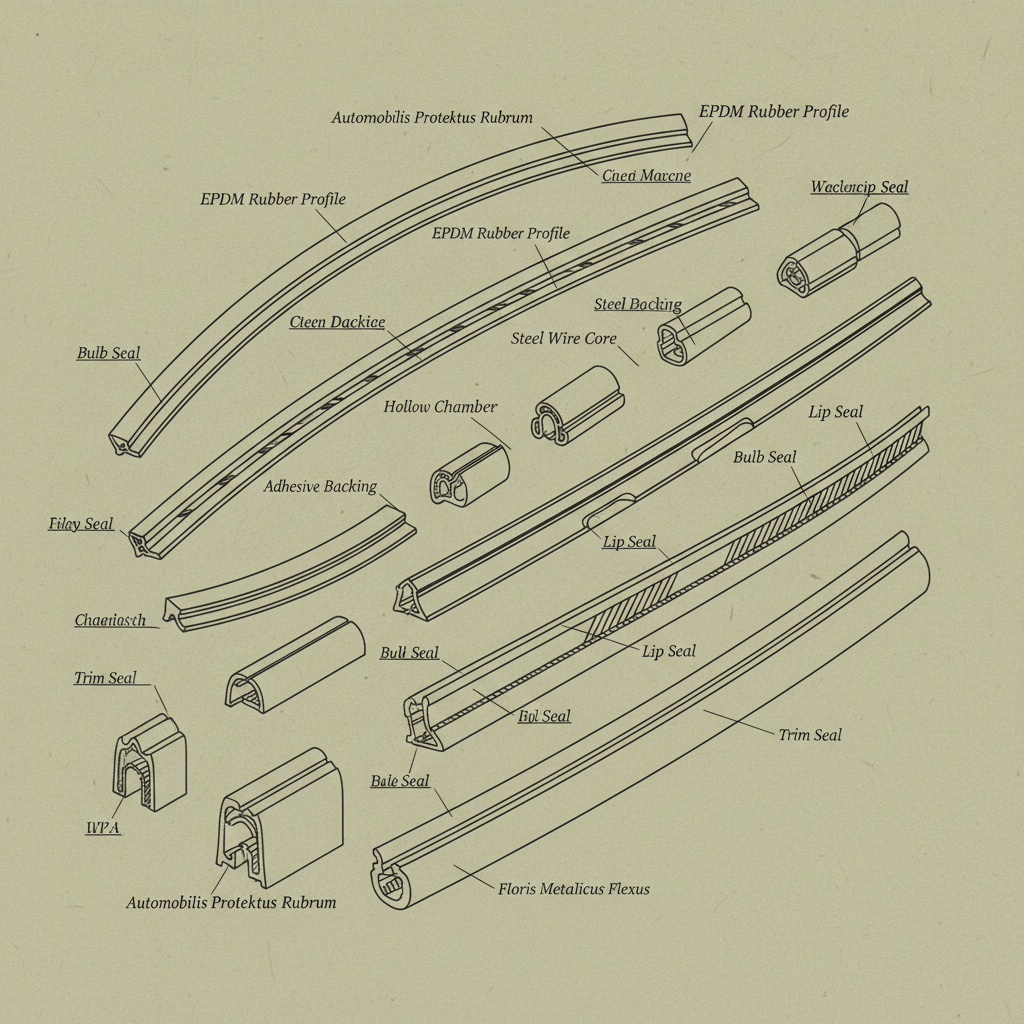
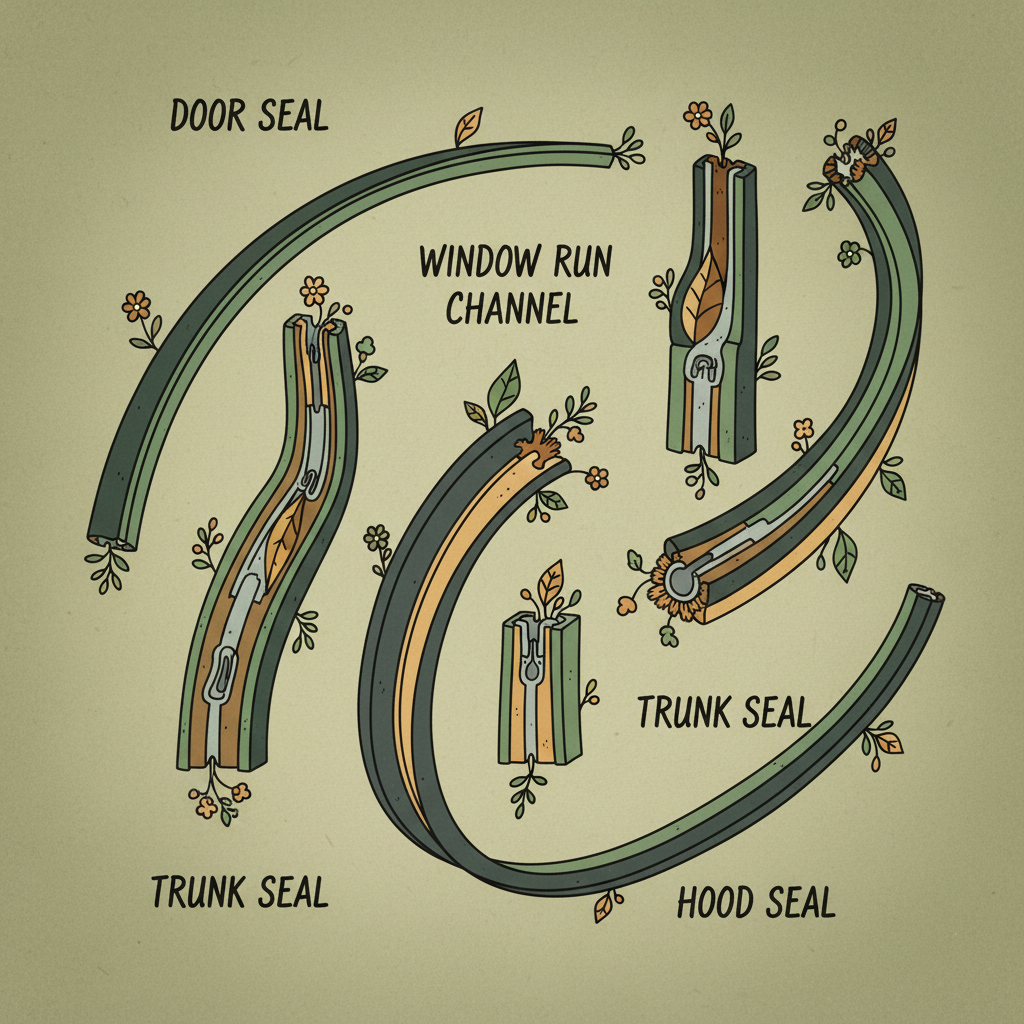
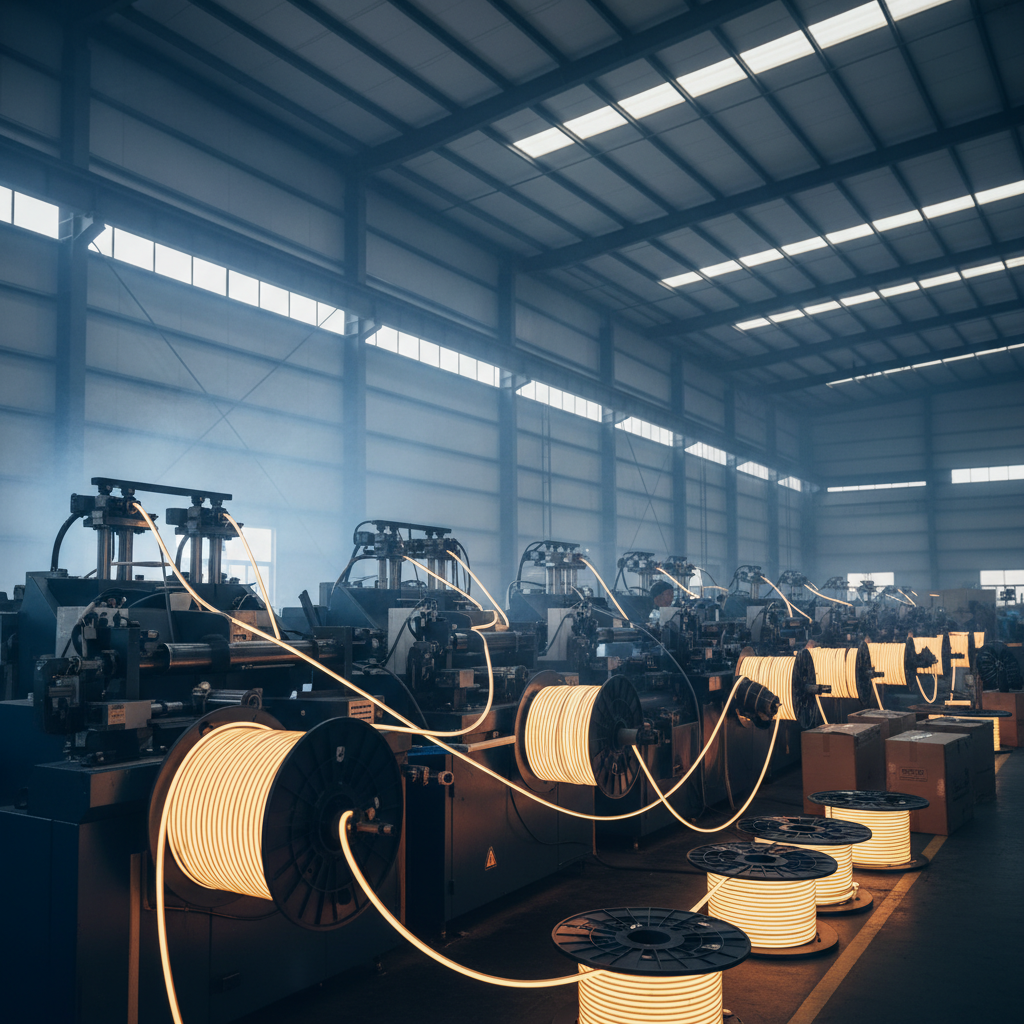
To be honest, this automobile sealing strip series stuff… it's been a year of running around factories, smelling rubber, and arguing with engineers. You wouldn't believe the changes happening, everyone's chasing that “sustainable” buzzword. It used to be just about keeping water out, now it’s about bio-content and recyclability. Complicated, right?
Have you noticed how everyone wants everything thinner, lighter, yet stronger? That's the impossible trinity. People sketching up designs in the office, they don't understand what it’s like when you're trying to wrestle a roll of this stuff onto a car door in the pouring rain. It's a mess.
Anyway, I think people underestimate just how much detail goes into something seemingly simple. You think it's just rubber, but there's EPDM, silicone, TPV… each with its own quirks. EPDM smells like… well, rubber, obviously. That slightly chemical smell. Silicone feels smoother, almost… waxy. TPV? A bit grittier, harder to work with. I encountered this at a factory in Ningbo last time – they were using a cheap filler in their TPV, and it cracked within weeks. Disaster.
The Changing Landscape of automobile sealing strip series
Strangely, the biggest driver isn’t automotive innovation anymore. It's actually the regulations. The stricter the emissions standards, the more critical effective sealing becomes. You've got to reduce wind noise for comfort, obviously, but also improve aerodynamics to save fuel. That means tighter tolerances, more complex profiles, and materials that can handle extreme temperatures. Everyone is scrambling for lightweight options too.
The shift towards electric vehicles is throwing another wrench in things. EVs need sealing for battery packs, not just the body. Different materials are required—something fire-resistant, naturally. And the sealing needs to handle the heat generated by the batteries. It’s a whole new ballgame.
Common Design Pitfalls in automobile sealing strip series
People designing these things from a desk… they tend to forget about manufacturing realities. They’ll specify a super complex curve or a really tight radius. Then you get to the factory, and the extrusion machine can't handle it! It’s always the same story. Or they'll demand a perfectly smooth surface, which just drives up the cost.
Another common mistake is underestimating the impact of UV exposure. Cheap materials will degrade quickly in sunlight, leading to cracking and leaks. I’ve seen it happen countless times. And don't even get me started on the adhesive. If the adhesive fails, the whole thing is useless.
And the biggest one? Not accounting for thermal expansion and contraction. Metal and rubber expand and contract at different rates. If you don't design for that, you're going to have gaps and leaks. It sounds simple, but it's a surprisingly common error.
Materials: It’s More Than Just Rubber
Like I said, it’s not just "rubber." EPDM is your workhorse – durable, weather-resistant, relatively cheap. But it's not great with oils or fuels. Silicone is fantastic for high-temperature applications and resists those fluids, but it's expensive and can be tricky to bond to other materials. TPV is a compromise – better oil resistance than EPDM, cheaper than silicone, but not as good as either.
There’s also PU (Polyurethane) which is flexible and durable, but sensitive to UV. And then you get into the really specialized stuff – fluorosilicone for extreme chemical resistance, or acrylic elastomers for high-temperature oil seals. Each one has its place. Choosing the right material is all about understanding the specific application and the environment it'll be exposed to.
The smell is a good indicator, honestly. A strong, acrid smell usually means there’s a lot of filler material. You want a clean, rubbery scent. Sounds crazy, I know, but after a while, you learn to trust your nose. Later… forget it, I won't mention it.
Real-World Testing of automobile sealing strip series
Lab tests are fine, but they don’t tell the whole story. I want to see how it holds up to actual abuse. We do salt spray tests, obviously, to check for corrosion resistance. We cycle the strips through extreme temperatures – from freezing cold to scorching hot – to see if they crack or deform.
But the real test is the water test. We mount the sealing strip onto a test panel and blast it with high-pressure water. We’re looking for any leaks, any signs of water intrusion. Then there’s the wind noise test, where we put the panel in a wind tunnel and measure the decibel levels. It's a bit of a crude process, to be honest.
automobile sealing strip series Performance Metrics
How Users Actually Employ automobile sealing strip series
You'd think it’s just about slapping it on a car, right? Nope. People use these things for everything. I’ve seen them sealing greenhouses, repairing boat hulls, even reinforcing shipping containers. DIYers are a whole different breed. They’ll try to use whatever they can get their hands on, regardless of whether it’s suitable for the application.
And the amount of damage I’ve seen from improper installation… Honestly, it’s criminal. They’ll stretch it too much, or not clean the surface properly, or use the wrong adhesive. Then they wonder why it leaks.
The Pros and Cons: A Pragmatic View
The biggest advantage? Keeps water out. Simple as that. And good sealing reduces wind noise, improves fuel efficiency, and protects the vehicle from corrosion. It’s a critical component, even if people don’t realize it.
But they’re not perfect. They can be expensive, especially the high-performance materials. Installation can be tricky, and they’re susceptible to damage from UV exposure, chemicals, and abrasion. And let’s be honest, they're not the most aesthetically pleasing component.
But you have to weigh the costs and benefits. In most cases, the advantages far outweigh the disadvantages. It’s all about choosing the right material and installing it correctly.
Customization and Practical Applications
Customization is key, especially for specialty vehicles. Last month, that small boss in Shenzhen who makes smart home devices insisted on changing the interface to , and the result was… well, let's just say it didn't seal properly and he had to redesign the entire enclosure. A costly mistake.
But seriously, we do a lot of custom profiles for electric vehicles, where they need specific shapes to accommodate battery packs and cooling systems. We can also add different colors, textures, and adhesives to meet specific requirements.
One recent project involved creating a sealing strip with integrated LED lighting for a luxury car manufacturer. It was a pain to tool up, but the end result looked fantastic. It's those kinds of challenges that keep things interesting.
Key Characteristics of automobile sealing strip series Material Selection
| Material Type |
Cost (1-10) |
Durability (1-10) |
Application Suitability |
| EPDM |
3 |
7 |
General automotive sealing |
| Silicone |
8 |
9 |
High-temperature and fluid resistance |
| TPV |
5 |
6 |
Moderate oil and weather resistance |
| PU |
6 |
5 |
Flexible sealing applications |
| Acrylic Elastomer |
7 |
8 |
High-temperature oil resistance |
| Fluorosilicone |
9 |
10 |
Extreme chemical and temperature resistance |
FAQs
EPDM is generally more cost-effective and offers good overall weather resistance, making it ideal for standard automotive applications. Silicone, on the other hand, boasts superior heat resistance and flexibility, but comes at a higher price point. Silicone's better at handling extreme temperatures and fluids – like in engine compartments – while EPDM's great for doors and windows. It really boils down to the specific application requirements and budget.
UV resistance is extremely important. Prolonged exposure to sunlight can cause materials like EPDM and PU to degrade, leading to cracking, brittleness, and ultimately, leaks. Manufacturers often incorporate UV stabilizers into the material formulation, but the effectiveness varies. Choosing a material with inherently good UV resistance – like some grades of silicone – is the best approach, especially for components exposed to direct sunlight for extended periods.
Check for proper adhesion – make sure it's firmly bonded to the surface without any gaps or bubbles. Look for any cuts, abrasions, or deformations in the material. Also, ensure it's properly aligned and compressed. A visual inspection should be your first step, and a gentle tug can help confirm adhesion. If something looks off, it probably is.
Definitely. There's a big push towards bio-based and recycled materials, driven by sustainability concerns. We're seeing more TPV formulations incorporating recycled content, and research into plant-based alternatives to traditional rubber polymers. Another trend is the development of self-healing sealing materials – materials that can automatically repair minor damage. It’s still early days, but it's promising.
It depends on the material. EPDM and TPV can generally be painted with a suitable primer and paint specifically designed for rubber. Silicone is more challenging to paint due to its low surface energy. Coating can improve UV resistance and provide a more aesthetically pleasing finish, but it's crucial to use a compatible coating that doesn't compromise the sealing properties. Always test a small area first!
Lifespan varies significantly based on material, exposure conditions, and quality of installation. EPDM generally lasts 5-8 years, silicone can last 10+ years, but it’s all a ballpark figure. Regular inspection and maintenance – cleaning and applying a protectant – can extend the lifespan. Harsh climates, chemical exposure, and physical damage will shorten it, of course.
Conclusion
So, where does all this leave us? automobile sealing strip series seems simple, but it’s a surprisingly complex field, driven by regulations, material science, and a constant need for improvement. From choosing the right rubber to ensuring proper installation, every detail matters. It's not just about keeping water out, it’s about durability, safety, and efficiency.
Ultimately, whether this thing works or not, the worker will know the moment he tightens the screw. It doesn't matter how fancy the design is or how much it costs. If it doesn't seal properly in the real world, it's a failure. And if you're looking for high-quality automobile sealing strip series solutions, visit our website at www.pulongte.com.